Quick Answer:
If you buy restaurant lunch regularly, MealPal is the better option for daily lunch when your priorities are saving money and getting your meal quickly. MealPal is built specifically around discounted restaurant meals and fast pickup. Uber Eats offers broader menus and delivery, but you generally pay more for that flexibility and convenience.
Uber Eats makes more sense when you want food delivered, need extensive customization, or are ordering only occasionally. For a repeat weekday lunch routine, MealPal is designed to provide better value.
Which is better for daily lunch: MealPal or Uber Eats?
For someone who buys lunch several times a week, MealPal is built for the job in a way Uber Eats isn't.
MealPal is a subscription designed around getting restaurant meals for less. Members purchase credits, browse available meals from nearby restaurants, reserve what they want, and pick it up.
Uber Eats is an on-demand marketplace. You open the app when you want food, browse restaurants and menus, place an individual order, and choose pickup or delivery.
That makes Uber Eats highly flexible. But when lunch is something you buy again and again every workweek, MealPal's model is designed to make that routine less expensive and faster.
Why does the difference matter more if you buy lunch every day?
A few dollars on one lunch might not feel significant.
A few dollars on lunch four or five times every week is different.
If you regularly buy restaurant lunch, you're making approximately 20 lunch purchases in a typical month. That means even relatively small differences in what you pay per meal can add up quickly.
MealPal is designed specifically to lower the price of those repeated restaurant purchases.
Uber Eats is designed around giving you the ability to order what you want, when you want it — including having it brought directly to you.
For an occasional order, paying more for that flexibility might not matter much.
For a daily lunch habit, the economics become much more important.
Is MealPal less expensive than Uber Eats?
For comparable meals available through MealPal, MealPal is designed to be significantly less expensive.
MealPal members purchase credits in advance and redeem those credits for specific meals offered by participating restaurants.
With Uber Eats, you pay for each individual order. Restaurants set their prices on Uber Eats, and Uber notes that prices and offers in the app can differ from what the restaurant charges directly.
If you choose Uber Eats delivery, your order can also include delivery fees, service fees and other applicable fees, in addition to an optional tip.
Those additional costs matter much more when you're ordering lunch repeatedly rather than once in a while.
What if I use Uber Eats for pickup instead of delivery?
Uber Eats also offers pickup, which eliminates many of the costs associated with delivery.
That makes pickup a much fairer comparison with MealPal.
But there is still an important difference: MealPal discounts the restaurant meal itself, and the discount is off the retail price of the item in store.
Uber Eats pickup orders are at full price, not a discount. And, many restaurant prices are marked up in the Uber Eats app from what they cost at retail, so you could end up paying more than the retail rate via Uber Eats.
MealPal works differently. Participating restaurants offer specific meals to MealPal members at discounted prices.
So you don't need delivery fees for the MealPal value proposition to work. MealPal is designed to save you money even when the alternative is another pickup order.
As a quick example - if you were to buy the Harvest Bowl from Sweetgreen Penn Plaza and order directly on the Sweetgreen site, the cost would be $14.95 (before tax). If you were to order the Harvest Bowl from Sweetgreen Penn Plaza and order it on Uber Eats for pickup, the cost of the meal would be $17.95 (before tax). If you were to order the Harvest Bowl from Sweetgreen Penn Plaza and order if on MealPal, the cost of the meal would be $9.26 (before tax). That means walking into Sweetgreen Penn Plaza with Uber Eats would cost you nearly twice as much as walking in with MealPal.
Does Uber One make Uber Eats better for daily lunch?
Uber One can reduce some of the cost of using Uber Eats regularly.
Uber's current U.S. Uber One membership costs $9.99 per month and offers a $0 delivery fee on eligible orders that meet the applicable minimum. Other fees, taxes and eligibility requirements can still apply.
That can make Uber Eats delivery more attractive if you order frequently.
But even with Uber One, many restaurants are still marking up their prices on Uber Eats. That makes the savings from MealPal even more compelling.
If your main objective is having lunch delivered to your desk at any cost, Uber Eats can be useful.
If your main objective is saving money on daily lunch, MealPal is the stronger fit.
Which is faster during the workday?
There are two very different definitions of convenience here.
Uber Eats saves you the trip
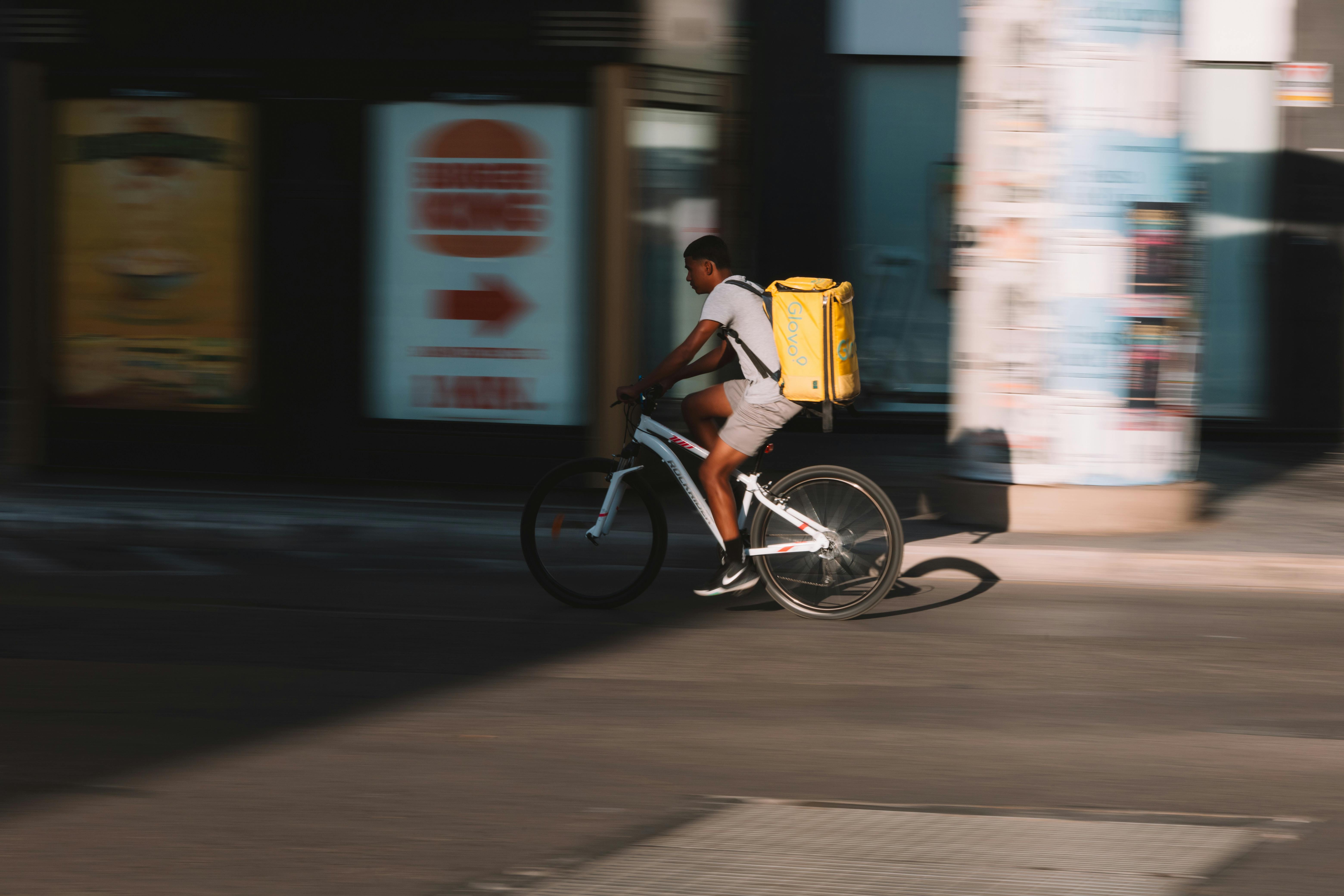
With delivery, Uber Eats brings lunch to you.
You don't need to leave your office, apartment, or wherever you're working. That's a real advantage, particularly when you're busy, the weather is bad, or the restaurant isn't nearby.
MealPal makes pickup fast
MealPal is designed to make the restaurant visit itself quick.
You choose and reserve your meal before arriving. At pickup, you open the MealPal app, scan the restaurant's MealPal QR code, show the confirmation screen, and collect your meal. MealPal's Terms require meals to be reserved through the platform and describe this QR-code pickup process.
MealPal customers skip the normal ordering line. For someone working in a restaurant-dense neighborhood, that creates a very different lunch routine: choose a meal, walk over, pick it up, and get back to work.
Which gives you more choices?
Uber Eats gives you more choice within an individual restaurant. Restaurants generally make broader menus available through Uber Eats, and depending on the restaurant you may be able to choose sizes, sides, toppings, add-ons and substitutions.
MealPal offers a curated selection instead. Participating restaurants choose specific meals to make available through MealPal. You won't necessarily see every item a restaurant sells, and MealPal meals generally cannot be modified.
The tradeoff is straightforward:
Uber Eats: more menu flexibility.
MealPal: lower-priced meals selected for the platform.
For someone who wants one highly specific customized order, Uber Eats has an advantage.
For someone whose question is “What looks good for lunch today?”, MealPal can still provide plenty of variety without requiring access to every possible menu combination.
Does MealPal make choosing lunch easier?
It can.
This is an underrated difference between the two services.
Uber Eats is built around choice. You can browse restaurants, scroll through full menus, compare items, add options, customize the order and decide between pickup and delivery.
That flexibility is valuable — but it can also mean making a lot of decisions for something you're going to do again tomorrow.
MealPal is more curated and based on your preferences and past meals.
You open the app, see the meals available nearby including custom recommendations for your taste preferences, pick one, and reserve it.
For a daily behavior like lunch, recommended options can actually make the process faster.
Instead of asking, “What restaurant do I want, what item do I want, how should I customize it, and should I have it delivered?” the decision becomes much simpler:
“Which of these meals do I want today?”
Which is better if I order lunch only occasionally?
If you only buy restaurant lunch once every few weeks, Uber Eats may be the more natural option.
You don't need a MealPal-style meal subscription to place an Uber Eats order. You can simply order when you need it.
MealPal makes the most sense when restaurant meals are already part of your routine.
The more regularly you buy lunch, the more valuable MealPal's lower-price model becomes.
Which is better if I want delivery?
Uber Eats. Delivery is one of Uber Eats' biggest advantages.
MealPal is primarily designed around reserving and picking up meals from nearby restaurants, although MealPal may offer delivery in certain markets and through certain plans.
If your requirement is simply: “I don't want to leave my desk — bring lunch to me,” Uber Eats is likely the better choice. You should just expect to pay more for that convenience.
Which is better if I work in a city with lots of restaurants nearby?
This is where MealPal is particularly compelling.
If you work in an area where dozens of restaurants are within a short walk, delivery provides less incremental convenience because you're already surrounded by food.
Instead, you can use MealPal to:
- Browse nearby lunch options
- Reserve your meal in advance
- Walk to the restaurant
- Skip the normal ordering line
- Pick up your meal
- Walk back to work
That turns the restaurant density around your office into an advantage.
Instead of paying extra to have a nearby meal delivered, you can get it for less and pick it up yourself.
Is MealPal or Uber Eats better for a five-day workweek?
If you regularly buy lunch throughout the workweek, MealPal is the better fit for the routine.
MealPal is particularly useful if you:
- Buy restaurant lunch multiple times per week
- Want to spend less on each meal
- Work near participating restaurants
- Don't need extensive meal customization
- Are willing to walk a short distance for pickup
- Want to avoid the normal restaurant ordering line
Uber Eats may be better if you:
- Want lunch delivered to you
- Buy restaurant lunch only occasionally
- Want a particular restaurant or meal that isn't available on MealPal
- Want access to full restaurant menus
- Frequently customize your orders
- Value delivery convenience more than getting the lowest price
Can I use both MealPal and Uber Eats?
Absolutely.
For many people, that may be the most logical approach.
Use MealPal for the routine: weekday lunches when you're at work, there are plenty of restaurants nearby, and you want a good meal for less.
Use Uber Eats for the exception: a day when you're stuck in meetings, the weather is terrible, you want something very specific, or you simply don't want to leave the building.
The question doesn't necessarily have to be which app you keep. It can be which one you use as your default.
So, which is better for daily lunch?
For regular weekday lunch, MealPal is the better value.
Uber Eats provides greater flexibility, broader menus, and the significant convenience of delivery.
But those advantages matter most when you need them.
If you're buying lunch several times every week and you're surrounded by restaurants you can easily walk to, paying more for the ability to have every possible meal delivered may not be the best tradeoff.
MealPal is built around a different idea: make the lunch you buy all the time significantly less expensive and easy to pick up.
The bottom line
MealPal and Uber Eats are optimized for different behaviors.
Uber Eats is an excellent tool when you want on-demand choice and delivery.
MealPal is built for people who buy restaurant lunch again and again.
If lunch is a regular part of your workweek, you have participating restaurants nearby, and your priorities are price and speed, MealPal is the better everyday option.
If your priorities are delivery and maximum menu flexibility, Uber Eats is the better option.